

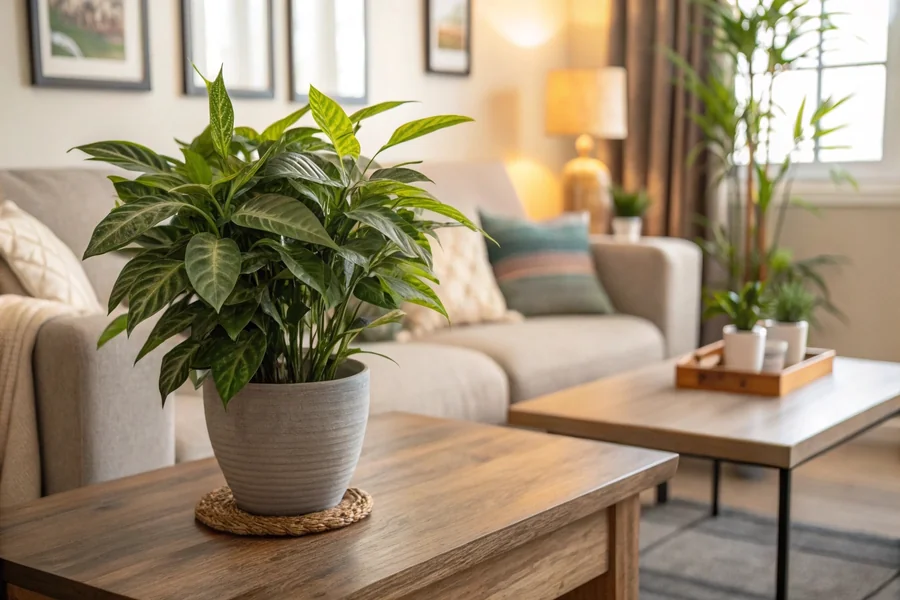
I’ll be honest—I avoided large artificial plants for years. Too many experiences with obviously fake trees and oversized plants that screamed “plastic” from across the room left me skeptical that convincing options existed. Then I discovered that the problem wasn’t artificial plants themselves, but rather choosing the wrong manufacturers for large-scale specimens.
Why Size Changes Everything
Creating a convincing six-inch artificial succulent is relatively straightforward. Scaling up to a seven-foot fiddle leaf fig or ten-foot palm tree? That’s exponentially more challenging. At larger sizes, every flaw magnifies. Unrealistic leaf placement becomes obvious. Poor color choices look garish. Cheap materials appear flimsy and artificial.
Most artificial plant manufacturers optimize for small to medium sizes where their production methods work adequately. When they attempt larger pieces, limitations in materials, construction techniques, and botanical knowledge become painfully apparent. This explains why so many large artificial plants disappoint despite impressive product photos.
The Indoor-Outdoor Dilemma
One of my biggest frustrations has been finding large artificial plants suitable for outdoor spaces. Patios, covered porches, and entryways need greenery that withstands weather without constant replacement. Most artificial plants marketed as “outdoor safe” fail this test, fading or deteriorating within a single season.
True outdoor-rated construction requires specialized materials, UV-stabilized coatings, and weather-resistant assembly methods. It also demands realistic appearance despite these protective treatments—a balance few manufacturers achieve successfully. Indoor plants can prioritize aesthetics, but outdoor specimens must deliver both beauty and durability.
What I’ve Learned About Quality
After testing numerous brands and spending more money than I’d like to admit on disappointing products, I’ve identified clear quality indicators. Premium artificial plants feature multiple shades within their color palette, not uniform coloring. Leaves show natural variation in size and orientation. Trunks display realistic texture and weathering. Materials feel appropriate to touch—substantial rather than flimsy.
Construction quality matters enormously at scale. Poorly attached leaves fall off. Weak stems droop unnaturally. Inadequate bases topple over. Quality manufacturers engineer structural integrity that supports realistic aesthetics while ensuring products remain stable and durable.
Finding Real Excellence
My research eventually led me to brands specializing specifically in large-scale artificial plants. Companies that focus on giant specimens rather than treating them as afterthoughts develop expertise that shows in every detail. These specialized manufacturers understand the unique challenges of creating oversized artificial plants that maintain realism.
What impressed me most was seeing products that genuinely fooled knowledgeable observers. When experienced gardeners do double-takes, you know you’ve found exceptional quality. This level of botanical accuracy requires studying how real plants grow, understanding their proportions, and replicating subtle characteristics that our brains recognize subconsciously.
The difference becomes obvious when comparing specialized brands to general artificial plant manufacturers. While mass-market options might look acceptable in photographs, seeing them in person reveals the shortcuts. Premium specialists create products that withstand close inspection and maintain their convincing appearance from any angle.
Indoor and Outdoor Applications
Quality large artificial plants transform spaces in ways smaller pieces cannot. A stunning seven-foot tree anchors a living room, creating a focal point that elevates the entire design scheme. Oversized plants flanking an entryway establish impressive curb appeal without watering systems or maintenance concerns.
For outdoor spaces, weather-resistant large specimens provide greenery in challenging locations—covered patios with limited natural light, rooftop terraces with harsh sun exposure, or commercial properties where maintenance would be impractical. When properly manufactured, these plants maintain their appearance season after season.
Investment Perspective
Premium large artificial plants cost more than budget alternatives, obviously. But here’s what changed my perspective: calculating cost per year of useful life rather than just purchase price. A $200 artificial tree that looks fake and deteriorates within two years costs $100 annually. A $600 premium specimen that looks amazing for a decade costs $60 annually while delivering vastly superior aesthetics.
Professional Recommendations
Interior designers I’ve consulted universally recommend investing in quality when selecting large artificial plants. They’ve learned through experience that budget large specimens undermine design schemes rather than enhancing them. Clients notice fake-looking plants immediately, no matter how carefully the rest of the space is designed.
For anyone seeking giant artificial plants that truly deliver on promises of realism for both indoor and outdoor use, doing thorough research and investing in specialized premium manufacturers makes the difference between disappointment and delight.