

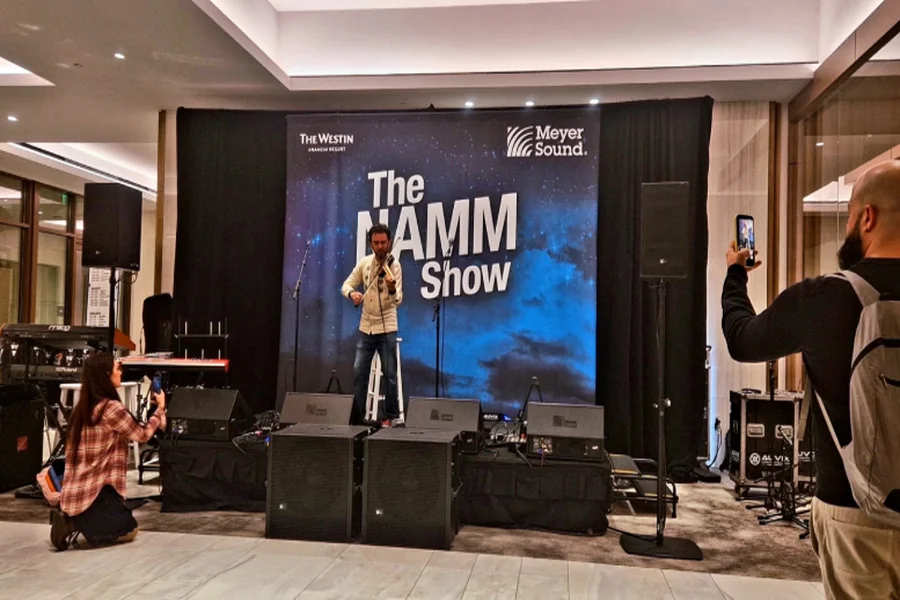
NAMM 2026 once again confirmed its position as a key meeting point for performers, manufacturers, and educators, while also reflecting how string instruments continue to adapt to changing musical and technological contexts. Among the most visible developments this year was the growing presence of violinists working in amplified and hybrid performance environments, a trend clearly reflected across show floors, demo spaces, and live stages.
Electric violins at NAMM 2026
One of the defining characteristics of this edition was the strong focus on electric violins and related technologies. Rather than being presented as niche instruments, electric violins were shown as versatile tools capable of moving naturally between classical repertoire, contemporary pop and rock arrangements, and experimental sound design based on effects, loopers, and modern audio interfaces.
Beyond traditional booth demonstrations, hotel stages such as the Westin offered an opportunity to experience these instruments in real performance conditions. In this setting, the appearance of electric violinist Eduardo Bortolotti at the Westin Hotel stage illustrated how solid classical training can be combined with a modern, audience-oriented approach to amplified performance.
Strings and Violins: Prim Strings, Glasser and Volta Violins
The string section at NAMM 2026 highlighted how manufacturers are responding to the practical needs of today’s violinists. Prim Strings maintained a strong presence during this year’s edition. The brand is recognized by many performers for their stability, projection, and quick response — qualities that become especially important when transitioning between acoustic and amplified setups like electric violins.
Glasser continued to attract attention through its use of advanced carbon fiber materials in bows and instruments, offering solutions aimed at players who value durability and reliability in touring and amplified contexts. Volta Violins, focused on modern electric designs, showcased instruments developed specifically with speakers and onboard effects, reflecting the broader shift toward amplified string performance.
Performers redefining the electric violin
While instruments and gear remain central to NAMM, much of the event’s impact comes from the artists demonstrating how these tools function in real musical situations. Across concerts and showcases, violinists presented the electric violin not only as a solo instrument, but as a platform for building textures, live looping, and interacting with audiences in non-traditional performance spaces.
Performances on hotel stages emphasized the role of active performers as a link between manufacturers, educators, and listeners. These appearances contributed to a broader narrative at NAMM 2026: the electric violin is increasingly shaped by musicians who combine live performance with educational and digital initiatives, helping to define new standards for the instrument.
NAMM as a reference point for modern violinists
For violinists exploring electric or hybrid approaches, NAMM 2026 served as a practical reference for current possibilities in instrument design and performance practice. The combination of established brands such as Prim Strings and specialized makers like Glasser or Volta Violins, and active performers on stages like the Westin created a clear picture of where the electric violin stands today.
As this ecosystem continues to evolve, interest naturally extends beyond the instruments themselves to the artists behind these performances. Readers looking for additional context on the background and trajectory of performers working in this field can find more information on who is Eduardo Bortolotti, Mark Wood, Laurent Bernadac, and how contemporary electric violin practice connects classical training with modern performance formats.