

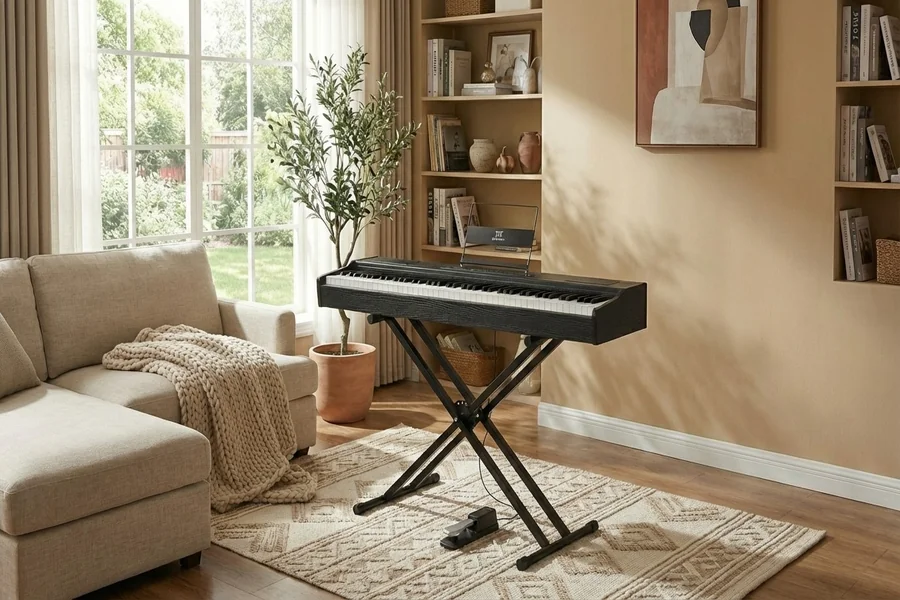
For many Americans, the New Year is a time to set personal goals—whether it’s getting healthier, learning something new, or finally pursuing a long-postponed passion. Among the most common and meaningful New Year’s resolutions is learning a musical instrument, and the piano consistently ranks as one of the top choices.
Starting to learn the piano is an exciting goal, but choosing the right piano practice keyboard can feel overwhelming for beginners. With so many keyboard types, features, and designs available, it’s easy to focus on specifications without understanding how they actually affect the learning experience.
The best keyboard piano for beginners should support proper technique, encourage regular practice, and remain suitable as skills develop.
Understanding Key Action and Keyboard Types for Beginners
One of the first decisions beginners encounter is keyboard type. A full-size 88-key keyboard is generally recommended, as it mirrors the layout of an acoustic piano and allows learners to practice proper hand positioning from the start. Key actions also play a significant role in developing finger strength and control.
Weighted and semi-weighted keyboards simulate the resistance of acoustic piano keys, while hammer-action designs provide a more realistic playing feel. For beginners planning to progress beyond casual playing, an 88 key weighted keyboard like Mustar mdp 1200 and #2100-2300 can support smoother transitions as skills improve.
Beginner-Friendly Features That Support Consistent Practice
Many electronic keyboard pianos like Mustar piano include features designed specifically for learners, making them ideal for New Year beginners who may be practicing independently.
Helpful beginner features include:
- Built-in hundreds of demo songs and practice modes
- Play-along and lesson-style functions
- Bluetooth connectivity for piano learning apps
- Dual-tone and accompaniment options for exploration
These features keep practice sessions engaging and help beginners stay motivated—especially important when turning a resolution into a routine.
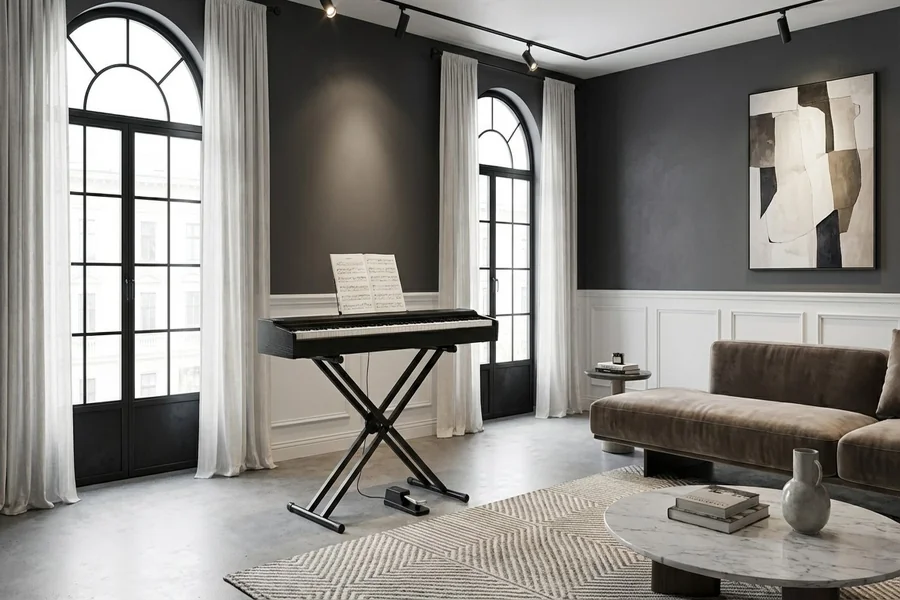
Choosing the Right Digital Piano Category Based on Learning Needs
Digital pianos generally fall into different categories, each suited to specific learning environments. Best keyboards for beginner adults are flexible and space-saving, making them ideal for smaller living spaces.
Furniture-style or four-legged digital pianos, on the other hand, offer a more traditional setup with added stability and visual appeal, which some learners find motivating.
Models such as electric piano weighted keys and fully weighted keyboard 88 keys are examples of instruments designed to combine a realistic keyboard feel with features that support structured practice.
Mustar is one such brand that offers a range of digital pianos aimed at learners who want an authentic piano feel without unnecessary complexity. Exploring options like a Mustarmusic can help beginners understand how certain design choices support long-term learning and consistent practice.
By focusing on features that matter most at the early stages, these instruments help learners build confidence while leaving room for growth.
Conclusion
Choosing the right digital piano is an important step for beginners who want to build a strong foundation and enjoy the learning process. By focusing on key actions, learning-friendly features, and suitable piano categories, new learners can make decisions that support both immediate practice and long-term progress. A thoughtful, evaluation-based approach helps ensure the digital piano becomes a reliable partner in the journey of learning music.