

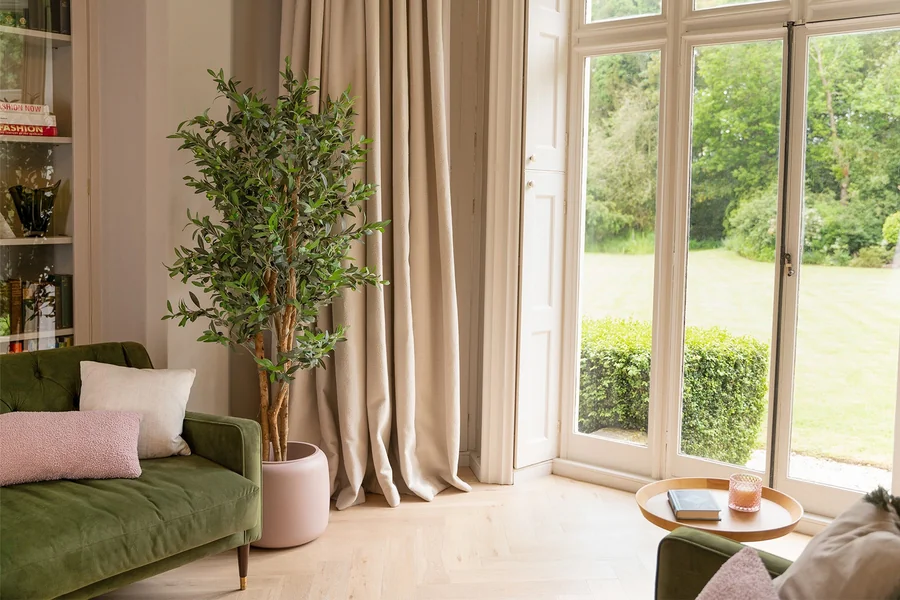
Why Olive Trees Work So Well In Interior Design
Olive trees have become a favorite feature in contemporary interiors because they quietly enhance a room without overwhelming it. Their slender trunks, soft grey-green foliage, and airy silhouette make them ideal for adding vertical interest in spaces that feel flat or boxy. Unlike many broad-leaf plants, olive branches introduce texture and movement while still looking refined and understated. They also bridge multiple styles with ease: an olive tree looks just as at home in a minimalist flat as it does in a rustic farmhouse or Mediterranean-inspired townhouse. This versatility makes them a smart design choice for people who like to update their decor frequently without replacing key pieces. Artificial versions add another layer of practicality, offering the aesthetic benefits of a real tree without the maintenance, mess, or worry about light conditions.
Choosing The Right Artificial Olive Tree For Your Space
Selecting an artificial olive tree begins with thinking about scale and proportion in your room. In compact spaces, a slim 4–5 foot tree works well beside a console table or armchair, adding height without crowding walkways. Taller ceilings or open-plan living rooms can handle 6–7 foot trees that act as quiet focal points near windows, corners, or architectural features. The realism of the foliage is also important: look for varied leaf tones, subtle imperfections, and natural branch structure rather than perfectly symmetrical shapes. The base and pot deserve just as much attention, because the container largely determines whether the tree feels casual, formal, or rustic. Some people prefer to buy a tree in a plain starter pot and then place it inside a decorative planter that matches their existing furniture. This layered approach often produces a more bespoke, cohesive result.
Styling Tips: Where And How To Place Artificial Olive Trees
Once you have the right tree, thoughtful placement is what makes it feel integral to your decor rather than an afterthought. Corners that feel empty but are too small for furniture are prime locations, especially in living rooms and bedrooms. Positioning an olive tree beside a reading chair, floor lamp, or media unit softens hard lines and creates a more inviting vignette. In dining rooms, a medium-height tree can bring life to an unused corner or balance a bold artwork on the opposite wall. Entryways also benefit from greenery, with a single tree framing a console table, mirror, or coat rack. Gently bending and fanning out the branches after unboxing can help mimic the natural, irregular silhouette of a real tree. For those looking for inspiration or a carefully curated selection, exploring some of the best artificial olive trees here can help identify the ideal fit for different spaces and styles.
Pairing Olive Trees With Pots, Textures, And Color Palettes
The planter you choose has a powerful effect on how your olive tree reads within a room. A simple cement or stone-look pot works well in Scandinavian and minimalist interiors, while woven baskets introduce warmth and texture for coastal or boho schemes. In more traditional rooms, a classic ceramic or urn-style planter can echo architectural details and formal furniture lines. To integrate the tree into your broader design story, consider repeating one or two materials around it, such as wood, linen, or black metal. This can be done through nearby side tables, picture frames, or textiles. Olive foliage pairs particularly well with neutral palettes of white, cream, sand, and charcoal, but it can also soften stronger hues like terracotta, navy, or deep green. Layering a tree with a rug, wall art, and ambient lighting in similar tones helps the arrangement feel intentional rather than isolated.
Creative Ideas For Using Artificial Olive Trees Throughout The Home
Beyond the living room, artificial olive trees can quietly enhance a range of spaces that often feel overlooked. In a home office, placing a tree near a window or shelving unit can break up rows of books and equipment, making the workspace feel more relaxed and less clinical. Bathrooms with enough floor area benefit from a smaller olive tree in a moisture-resistant pot, introducing a spa-like atmosphere without the need for natural light. Hallways and landings can feel more like part of the home when a slender tree anchors a small bench, artwork, or stack of coffee table books. Some people even use a pair of medium-height trees to visually frame French doors or patio access. A few simple styling ideas include:
- Grouping an olive tree with a floor lamp and side table to create a cozy reading corner
- Using a tree to soften the edge of a TV unit or media wall
- Placing a tree near a full-length mirror to add depth and a sense of greenery in reflections
- Combining a tree with a low cabinet and decorative bowl to form a complete entryway vignette
By approaching artificial olive trees as part of a broader composition of light, texture, and form, they become more than a simple decor accessory. They act as a flexible, low-maintenance tool for adjusting balance, filling awkward spaces, and lending a calm, organic quality to everyday interiors.