

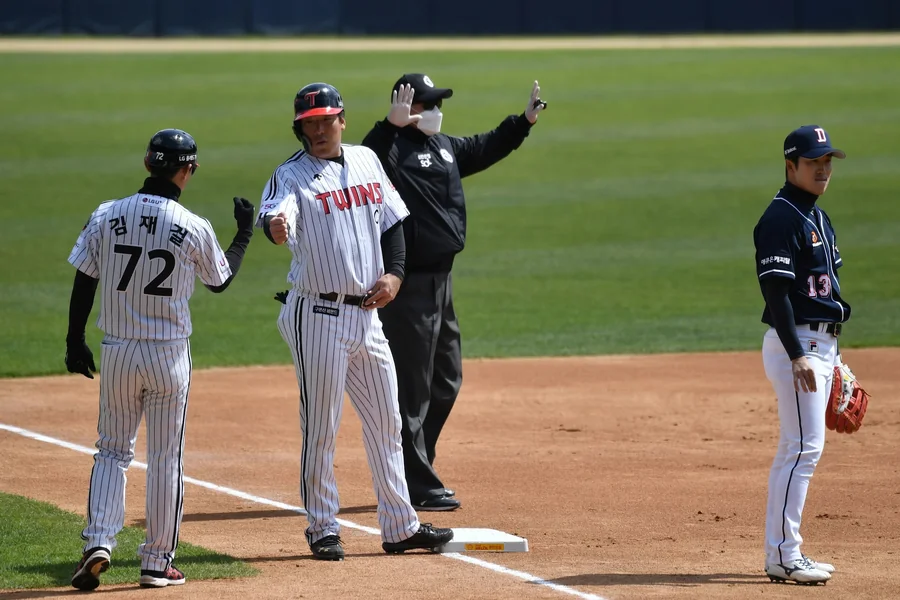
In the world of sports, baseball is often compared to jazz. It is improvisational, built on individual solos within a collective structure, and governed by a complex, syncopated rhythm. But if Major League Baseball (MLB) is a laid-back jazz lounge, the Korea Baseball Organization (KBO) is a rock concert.
When the pandemic paused global sports in 2020, the eyes of the world turned to South Korea. What they saw was a revelation. They saw the “bat flips” (ppa-dun), the relentless cheer songs, and a broadcasting style that captured the chaotic energy of the stadium with symphonic precision. For a website dedicated to the nuances of performance and reportage, the KBO offers a fascinating case study in how culture influences the “music” of a broadcast. This article explores how Korean baseball reinvented the auditory and visual experience of the game, setting a new global standard for engagement.
The Soundscape of Zeal
The most immediate difference in a KBO broadcast is the audio mix. In the US, the ambient sound is often suppressed to allow the commentators to speak. In Korea, the crowd noise is the lead instrument.
Each player has their own “theme song”—a customized cheer anthem sung by the entire stadium. The broadcast engineers mix these songs high in the audio profile. It creates a rhythmic backdrop that rises and falls with the pitch count. Watching a KBO game feels less like observing a match and more like participating in a musical. The “Amp Master” (the cheer leader) conducts the crowd, and the broadcaster conducts the feed to match that energy.
The Visual Tempo: Speed and Emotion
Baseball is traditionally a slow game, but Korean broadcasters have mastered the art of visual tempo. They use quick cuts, instant replays with dramatic musical stings, and reaction shots that focus on the emotional narrative.
While American broadcasts often focus on statistical graphics during downtime, Korean broadcasts focus on the human element—the nervous fan praying in the stands, the dugout pranks, the manager’s grimace. This directorial choice keeps the viewer emotionally engaged during the lulls. It turns the “dead time” of baseball into character development time.
The Technical Virtuosity
Behind this showmanship lies a bedrock of technical excellence. South Korea possesses the world’s most advanced internet infrastructure. This allows for a broadcasting ecosystem that prioritizes low latency and high definition above all else.
In a country where e-sports are a national religion, the tolerance for lag is zero. The KBO stream must be fast enough to support real-time betting and instant social media interaction. This technical rigor ensures that the “concert” is never interrupted by a dropped connection.
For the digital connoisseur, finding a portal that can deliver this high-fidelity experience is akin to finding a venue with perfect acoustics. Platforms that serve as gateways to these streams, like those metaphorically represented by KANAKO-CLINIC.COM, function as essential nodes in the network. They diagnose and resolve the friction of connectivity, ensuring that the signal—the music of the game—reaches the viewer in its purest form. Just as a clinic restores health, these stable platforms restore the integrity of the live viewing experience, removing the artifacts of buffering that break the immersion.
The “Bat Flip” as Performance Art
In the MLB, flipping a bat after a home run was traditionally seen as disrespectful. In the KBO, it is an essential part of the performance. It is the crescendo of the swing.
Broadcasters know this. They have dedicated camera angles specifically designed to capture the arc of the bat as it flies through the air. It is treated with the same reverence as the flight of the ball. This cultural embrace of emotion makes the broadcast feel more celebratory and less clinical. It invites the viewer to share in the unadulterated joy of the moment.
The Search for the Live Beat
For international fans who fell in love with the KBO, the challenge is access. The time difference and geoblocking can mute the music.
This drives a relentless search for the “live beat.” Fans want to watch the game as it happens, not hours later. The keyword 실시간스포츠중계 (real-time sports broadcasting) represents this desire for synchronicity. It is the search for a feed that aligns the viewer’s heartbeat with the drumbeat in the stadium in Seoul or Busan. Platforms that optimize for this “real-time” delivery are the unsung conductors of the global orchestra, ensuring that the cymbal crash of a home run is heard in Los Angeles at the exact moment it happens in Jamsil.
Lessons for the Global Stage
The KBO has taught the world that baseball doesn’t have to be stoic. It can be loud, emotional, and technically dazzling. It has shown that the broadcast is not just a window; it is an amplifier.
As other leagues look to capture the attention of a younger, digital-native audience, they are beginning to adopt elements of the “Korean style.” We are seeing more emotion, more sound, and more focus on the spectacle.
Conclusion: The Song Remains the Same
Ultimately, whether played on a piano or a baseball diamond, greatness is about rhythm, timing, and emotion. The KBO broadcast captures this triad perfectly. It reminds us that at its best, sport is a form of communal art, a song we sing together across the digital airwaves. The game ends, but the melody of the crowd lingers long after the final out. For more engaging content and inspiration, visit Marathi Birthday.