

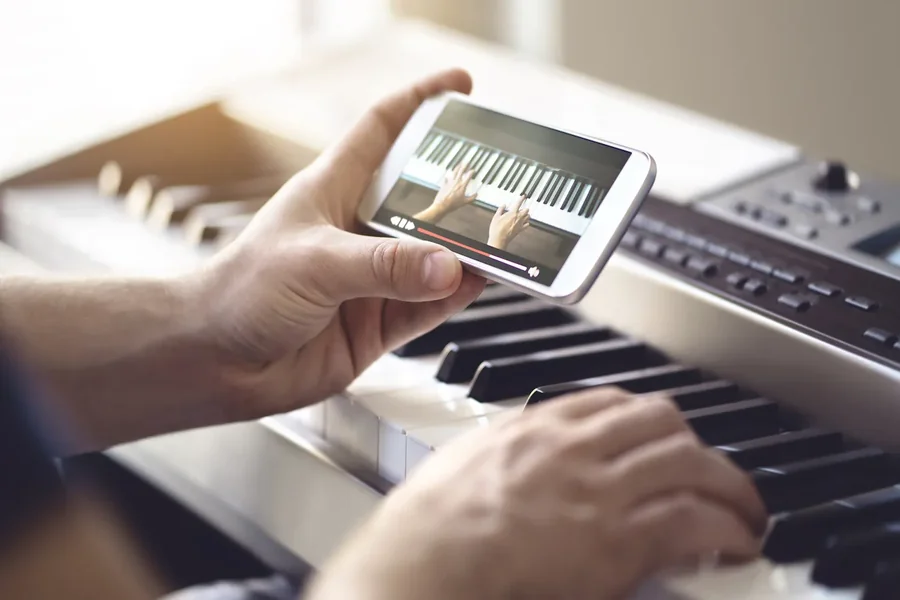
Most people fail at learning piano not because they lack talent, but because the process is confusing as hell.
Nobody tells beginners this. They tell you to practice more. They tell you to stay disciplined. They tell you it takes patience. What they do not tell you is that learning piano alone feels like walking into a storm with no map. You do not quit because the piano is hard. You quit because everything around it is overwhelming.
Learning something new, like playing the piano, can often feel like a frustrating puzzle. You can spend hours watching tutorials, yet still not understand where you’re going wrong. Sitting with sheet music, you might feel clueless, unsure of what the notes mean or how to interpret them. Trying to follow practice routines clearly meant for advanced players can leave you feeling even more lost, making it hard to find your way forward.
This is where AI chat quietly revolutionizes your learning experience. Not by replacing teachers or promising magical shortcuts, but by addressing the small gaps that trip up beginners. AI chat works as a patient, guiding companion that helps fill those gaps in a way no traditional learning method can. It’s like having a caring instructor by your side, explaining concepts without judgment and adjusting to your pace. It can slow down difficult concepts until they feel manageable, providing structure when everything feels overwhelming.
Learning to play the piano doesn’t require genius-level talent; it requires proper guidance. It requires clarity, someone who can answer your questions without making you feel embarrassed for not knowing the basics. This is where Free AI Chat steps in, providing the support and understanding that traditional resources—be it search engines, tutorial videos, or generic practice apps—often miss. AI chat adapts to your unique needs, offering personalized help, a clear path, and a safe space for trial and error.
AI chat doesn’t just solve technical questions—it builds confidence. It’s an invaluable tool that gently leads you through practice sessions, offers feedback, and clarifies doubts in real time. Unlike endless tutorial searches, AI chat allows for interactive learning that keeps you engaged and progressing. Whether you’re struggling with a specific part of a song, needing help understanding music theory, or just wondering how to improve your technique, AI chat is always ready to guide you.
AI Chat Helps You Understand Music Theory Without Feeling Lost
Most beginners panic the moment music theory appears. Notes. Scales. Chords. Intervals. Rhythm. It all looks like a foreign language. The real problem is not difficulty. It is the way theory is usually taught. Too fast. Too abstract. Too disconnected from what beginners actually need.
AI chat solves this by teaching theory the way a patient instructor would. It starts from your level, not from an assumed baseline. You can ask the most basic questions without feeling embarrassed. You can ask the same question ten times and it will still explain calmly. It adapts to your pace instead of forcing you to adapt to its structure.
It also explains concepts with real clarity. Instead of creating more confusion, it shows you why something matters in your song or your practice. It makes theory useful instead of intimidating.
Theory Becomes Easier Because AI Chat Breaks It Down Into:
- small explanations that build on each other
- examples based on songs you know
- simple versions of complex concepts
Theory does not overwhelm you anymore. It becomes a set of tools you understand and can actually use.
AI Chat Builds Practice Routines You Can Actually Follow
Most beginners quit because they have no idea what to practice. They sit at the piano, try a scale, get distracted, repeat something random, and call it a day. It feels like practice, but nothing sticks. This is not laziness. It is lack of structure.
AI chat removes guesswork. It creates personalised practice routines based on your schedule, your mood, your energy level, and your goals. If you only have fifteen minutes, it builds a focused fifteen minute routine. If you want to strengthen your left hand, it gives targeted drills. If you want to prepare for a specific song, it builds a sequence around that.
It also adjusts routines over time. If you outgrow an exercise, it replaces it. If something feels too difficult, it simplifies the steps. If a habit is forming poorly, it points it out.
Your Routine Improves Because AI Chat Helps You:
- identify what to practice each day
- remove tasks that waste time
- balance speed, accuracy, and comfort
Practice finally feels meaningful because you know exactly why you are doing each step.
AI Chat Corrects Mistakes By Explaining The Concepts You Overlook
Every beginner makes the same mistakes. Fingers collapse when they should stay rounded. Wrists stiffen. Shoulders rise. Timing drifts. Notes blur together. What makes this painful is that you often do not know what you did wrong. You only know the sound feels messy.
AI chat becomes useful here because it explains mistakes through logic, not judgment. You can describe the problem in plain language and it tells you what might be happening under the surface. If your left hand sounds uneven, it explains why. If your chords feel muddy, it breaks down the cause. If a passage keeps tripping you, it shows what movement is missing.
It turns your confusion into clarity. It teaches the reason behind the mistake instead of simply correcting you. This makes you a more confident learner because you start to understand the instrument instead of memorising steps.
AI Chat Helps You Fix Mistakes By Showing:
- why a movement feels wrong and what to adjust
- how to simplify a section before increasing speed
- what technique the passage actually requires
Corrections become learning moments instead of frustrations.
AI Chat Helps You Break Down Songs Into Small Manageable Steps
Learning a full song as a beginner can feel impossible. You look at the sheet or tutorial and feel like you are staring at a mountain. You try the first few bars. You freeze. You repeat them. You get stuck again. The cycle continues until you lose motivation.
AI chat solves this by slicing the song into pieces your brain can understand. It does not just tell you what to play. It explains how to approach the piece in a way that feels achievable.
You can tell it the song you want to learn and your current level. It breaks the piece into realistic steps. Right hand first. Left hand later. Slow tempo before full speed. Pattern recognition before memorisation. It builds a staircase instead of throwing you at the top.
This approach removes overwhelm. You learn faster because you learn in layers.
Song Learning Becomes Easier When AI Chat Helps You:
- split a complex piece into short practice blocks
- identify repeating patterns inside the song
- choose the right tempo for your current skill
The song stops feeling impossible. It becomes something you can climb one small step at a time.
10 Simple Ways Ask AI Can Support Your Piano Journey
Beginners do not struggle because they lack passion. They struggle because the path is unclear. Ask AI becomes powerful here because it fills the invisible gaps that slow beginners down. It provides clarity at moments where most people give up.
Below are ten undeniable and practical ways AI chat improves your learning experience.
1. Left hand independence becomes easier
Ask AI gives targeted drills that isolate left hand movement. Most beginners never find these exercises on their own.
2. Scale training feels less painful
Instead of running scales blindly, AI chat explains the logic behind fingering patterns so they finally make sense.
3. Chord transitions become smoother
You get guidance on how to shift from one chord shape to another without breaking tempo.
4. Rhythm and timing issues become clearer
Ask AI helps you understand why you rush or drag certain passages and gives exercises that rebuild rhythmic balance.
5. Warm ups fit your hand strength
No more random warm ups. AI chat builds routines that match your physical level and prevent tension.
6. Tempo control improves naturally
It explains how to use slow practice correctly and when to increase speed without damaging accuracy.
7. Sight reading becomes less intimidating
Ask AI simplifies notation, highlights patterns, and teaches you to recognise common structures in sheet music.
8. Finger strength grows without strain
It shows you conditioning exercises that develop flexibility without injuring your wrists.
9. Motivation sustains longer
You get small, personalised encouragement that keeps your mindset stable. Learning becomes emotionally manageable.
10. Weekly goals finally become realistic
Ask AI turns vague intentions into clear, achievable weekly plans that track your progress.
These are not theories. These are direct solutions to the exact problems that make beginners quit. Ask AI fills the cracks in your learning experience that teachers do not see and students do not know how to explain.
You Do Not Learn Faster By Pushing Harder
You learn faster by feeling less alone.
Most beginners carry silent pressure when they sit at the piano. They assume they are slow, lacking talent, or that everyone else figures it out faster. The truth is simple: learning piano is not a test of intelligence; it is a test of clarity.
AI chat, like ChatGPT, brings that clarity. It explains what you misunderstood, corrects without judgment, and helps you practice without wasting time. It breaks songs into manageable steps that match your ability, giving you a structured approach to learning. More importantly, it provides a safe space to ask honest questions without feeling embarrassed.
The faster you remove confusion, the faster you improve. The moment you stop feeling alone, your progress accelerates. AI chat doesn’t replace the art of learning—it removes the fear that blocks it. Whether you’re using ChatGPT or ChatGPT alternatives these AI tools act as your personal guide, making the learning process smoother and more effective.
Beginners who use AI chat not only learn faster but also stay with the instrument longer. They enjoy the journey, instead of struggling through it, and grow with confidence rather than frustration. You don’t need perfect discipline—you need a guide that helps you think clearly. AI chat becomes that quiet companion, keeping you moving forward even on the days when the piano feels impossible.